
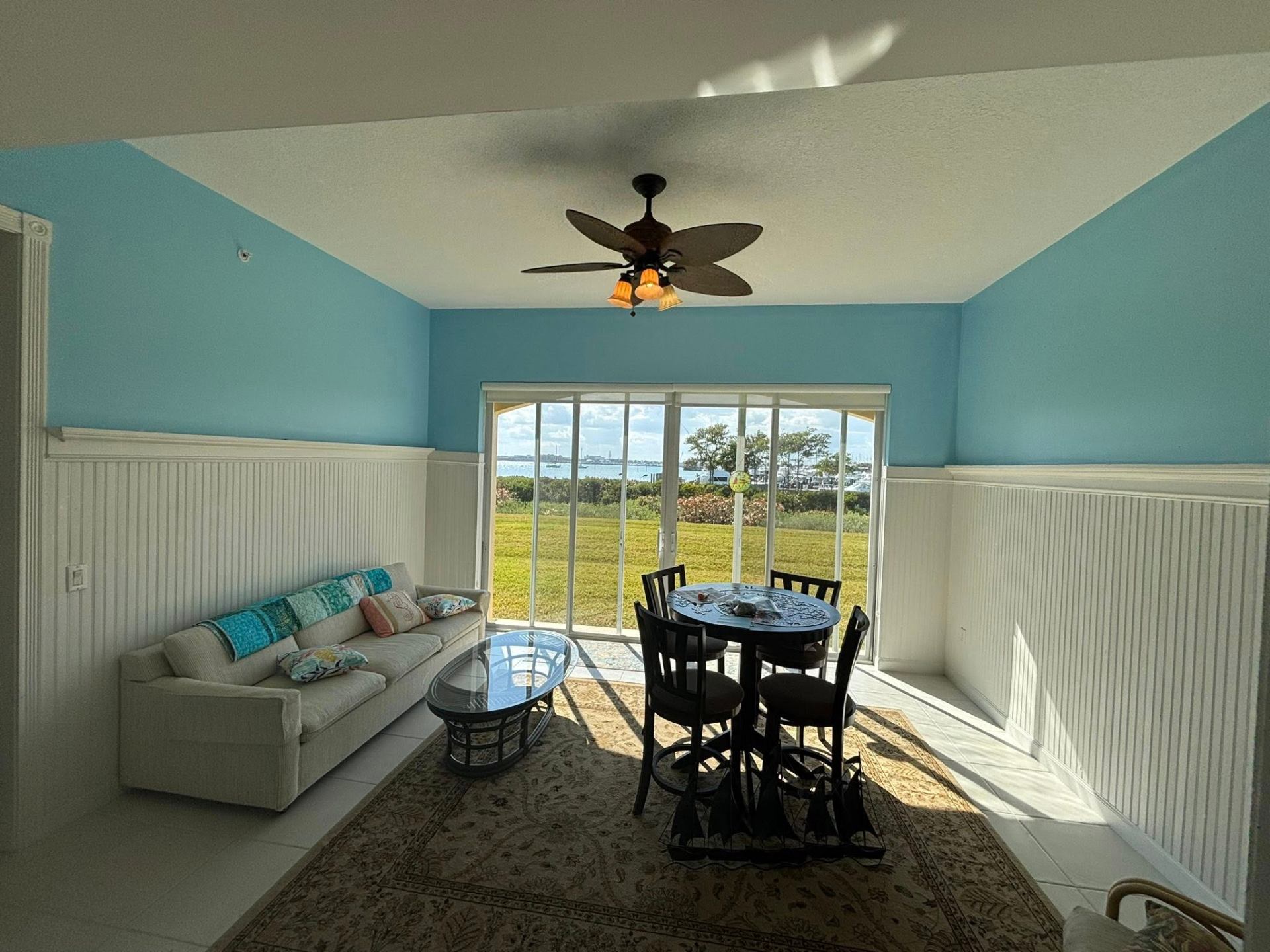
Start with what you can't change
Before you open a fan deck, look at what's already in the room that isn't moving: flooring, countertops, cabinets, permanent tile, big pieces of art. Those set the undertones you have to live with. Pick a paint color that fights your travertine floor or your quartz countertop and you'll be repainting within a year.
Undertones are the whole game
Every neutral has an undertone — a hint of another color underneath the surface neutral. A "beige" can lean pink, yellow, green, or gray. A "gray" can lean blue, purple, or green. The color on the chip usually reads more neutral than it actually is on the wall.
The trick: hold the chip next to a piece of pure white printer paper. The undertone jumps out immediately.
Florida light changes everything
Treasure Coast homes get intense, cool, high-angle light most of the year. That light:
- Pushes warm colors cooler. That perfect Tuscan tan reads greenish on a Vero Beach wall.
- Bleaches out subtle colors. Very pale grays and off-whites can look almost pure white in mid-day sun.
- Amplifies undertones. A gray with a slight blue undertone will look distinctly blue in a west-facing living room at 4 PM.
A color that looks perfect in a Home Depot showroom under fluorescent light is a different color entirely on your east-facing bedroom wall at 7 AM. Test in place, or plan to repaint.
The five-step color selection process
1. Choose your whites first
Trim, ceiling, and any built-in white cabinetry set the anchor. Pick these before wall colors:
- Ceiling: a true, clean white in flat sheen. Benjamin Moore Chantilly Lace, Sherwin-Williams Pure White, or their matches.
- Trim: either match the ceiling white or go one step warmer for contrast (BM White Dove is the classic).
2. Narrow to 3–5 wall color candidates
Instead of grabbing 40 chips, pick a small family: three whites, three greiges, three grays — whatever direction you're leaning. Cross-reference undertones against your fixed elements.
3. Buy actual sample pots and paint big swatches
Not 4-inch chip samples. Not peel-and-stick. Real sample paint, applied in 2' × 2' patches directly on the wall — one on the sunniest wall, one on the shadiest wall. Put them next to each other so you can compare.
4. Look at them at four times a day
Morning light, midday sun, late afternoon, and evening with your lamps on. A color that looks great at 10 AM can turn muddy at 8 PM under warm bulbs. If it looks good in all four, it'll look good permanently.
5. Commit and buy the real paint
Once you've picked, buy the manufacturer's version — not a big-box store's "color match" of another brand. Color matches are approximations, and they can drift over time when you need to touch up.
Whole-home flow
Open-concept Florida homes need colors that transition well. A rule that works:
- Pick one main wall color for your open living/dining/kitchen space.
- Pick one secondary color, one or two shades lighter or darker, for hallways, entries, and transitions.
- Reserve accent colors for closed rooms — bedrooms, offices, powder rooms.
- Keep trim white consistent through the whole house so eye moves without stopping.
Three to four wall colors across a whole home is the sweet spot. More than that and the house starts to feel choppy.
Sheen matters as much as color
- Flat/matte: ceilings and low-traffic bedrooms. Hides drywall imperfections. Hard to clean.
- Eggshell: most Florida living areas. Soft glow, wipes clean.
- Satin: kitchens, baths, kids' rooms, hallways. More scrubbable.
- Semi-gloss: trim, doors, cabinetry. Durable and washable.
The higher the sheen, the more every wall imperfection shows. On older Florida homes with textured walls, stick to eggshell or lower on the walls themselves.
What's working on the Treasure Coast right now
Current requests across our interior painting projects skew toward warm-neutral palettes rather than the cool grays that dominated 2015–2020:
- Warm whites: BM White Dove, SW Alabaster.
- Soft greiges: BM Edgecomb Gray, SW Accessible Beige.
- Deep accent walls: navy (BM Hale Navy), forest green (SW Pewter Green), moody black (BM Soot).
- Cabinets: warm whites, deep greens, and near-blacks.
When in doubt, hire the color consult
A one-hour consultation with a color designer or an experienced painter runs $100–$250 on the Treasure Coast and saves the $2,000+ of repainting a color you hate. Bring your flooring sample, a countertop chip, and a photo of your main sofa or bedding. A pro will narrow 40 candidates down to 3 in about 20 minutes.