What popcorn ceilings actually are
The bumpy, sparkly ceiling texture in a lot of Florida homes built between roughly 1965 and 1990 is a spray-applied acoustic texture — commonly called popcorn, cottage cheese, or stucco ceiling. Builders loved it because it hid drywall seams and imperfections without a skilled finisher. Today it reads as dated the moment a buyer walks in.
Why homeowners remove it
1. Your home looks and shows newer
Smooth ceilings instantly modernize a room. On listings across Vero Beach, Stuart, and Port St. Lucie, "smooth ceilings" and "popcorn removed" are two of the most common bullet points in updated homes because agents know how much difference it makes in photos and in person.
2. Cleaning gets a lot easier
Popcorn texture catches dust, cobwebs, and — in coastal homes — a fine layer of salt and cooking residue. You can't wipe it. You can barely vacuum it without knocking chunks loose. A flat ceiling wipes clean with a microfiber pad on a pole.
3. Lighting improves
Bumpy ceilings scatter light in a hundred directions and cast tiny shadows across the whole surface. Smooth ceilings reflect light evenly, which makes rooms feel brighter and taller — especially valuable in Florida homes with 8-foot ceilings and a lot of recessed lighting.
4. Repairs become simple
Any plumber, electrician, or AC tech who has to cut into your ceiling leaves a patch. Matching popcorn texture is notoriously hard and almost always visible. On a smooth ceiling, a patch disappears with a coat of paint.
5. Resale value
You won't see a line-item bump on your appraisal, but agents consistently report that homes with smooth ceilings sell faster and closer to asking. Buyers subtract for projects they'll have to do; popcorn removal is one of the ones they subtract heavily for because it's messy and disruptive.
The asbestos question — read this first
Any popcorn ceiling installed before 1980 (and some as late as 1986) can contain asbestos. It's harmless when it's undisturbed. It's a serious health hazard the moment someone starts scraping it dry.
Before any removal work begins on an older Florida home, we require:
- A small ceiling sample sent to an accredited lab (usually $30–$60, results in a few days).
- Written confirmation of the result before scheduling.
If the test comes back positive, removal has to be done by a licensed asbestos abatement contractor — not a general painter. If it's negative, we can proceed with the standard process.
How the removal actually works
A professional popcorn removal on a tested-safe ceiling looks like this:
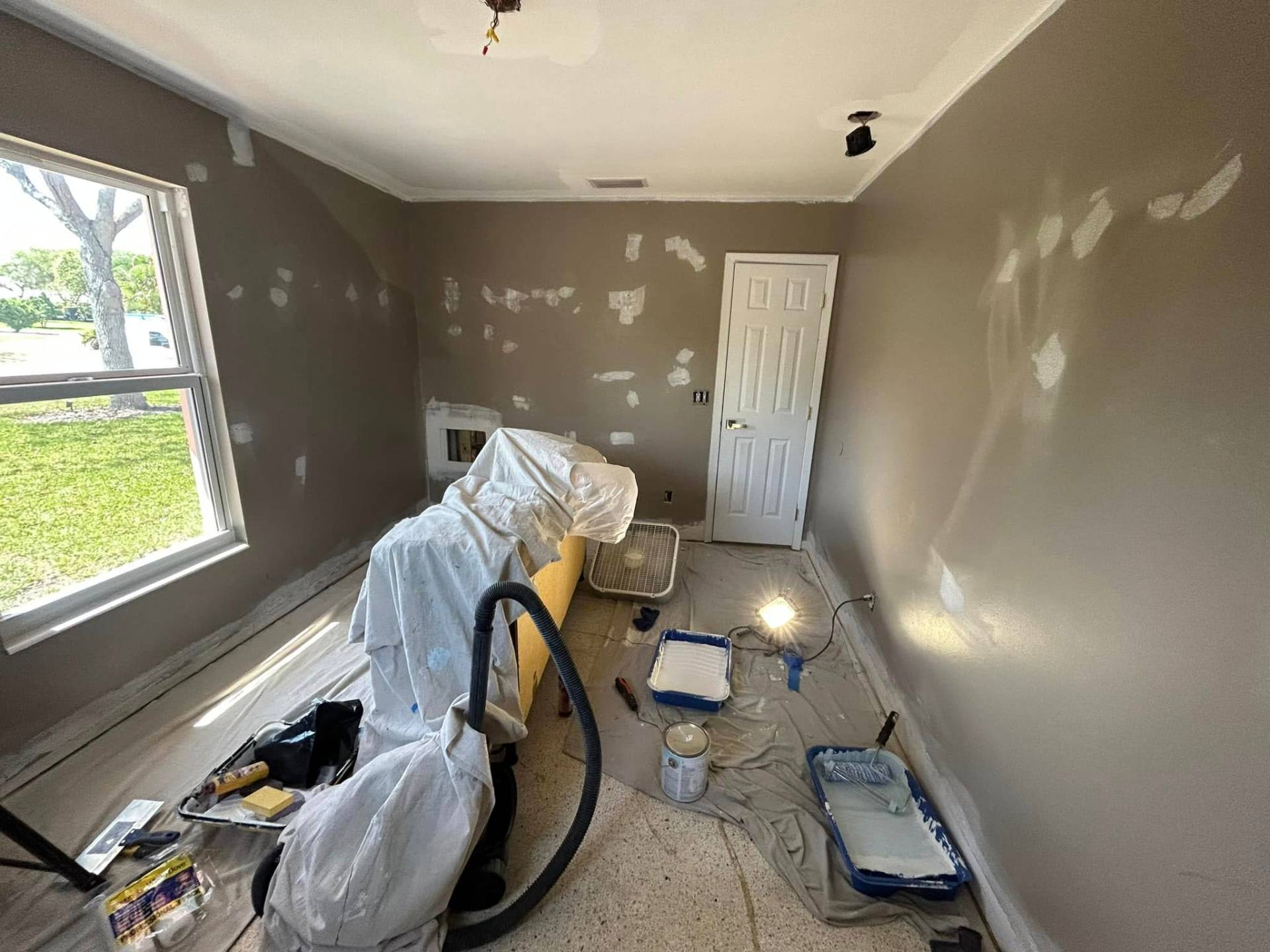
- Full containment. Floors and walls get plastic and paper. Furniture is either removed or wrapped and pushed to the center.
- Water misting. The texture is misted with warm water and left to soften for 10–15 minutes. Wet scraping is dramatically less dusty than dry.
- Scraping. The softened texture comes off in wet sheets with a wide taping knife.
- Skim coat. The bare drywall almost always has taping and screw marks that were hidden by the texture. We apply a thin skim coat of joint compound to level it.
- Sanding. Sanded flat under raking work light — this is where a real finisher earns their money.
- Primer and paint. Full ceiling primer, then two coats of flat ceiling paint. Never skip primer over fresh mud.
See our drywall repair and popcorn ceiling removal service for the full scope and pricing considerations.
Alternatives if removal isn't right
Sometimes removal isn't practical — the ceiling tests positive for asbestos and you don't want to abate, or budget won't stretch that far. Two common alternatives:
- Overlay with drywall. A 1/4" or 3/8" sheet is fastened over the existing ceiling, taped, mudded, and finished smooth. It seals the popcorn in place and gives you a new surface.
- Paint and live with it. A fresh coat of bright white ceiling paint knocks down the yellowing and dust, which buys you time and pictures better.
Timeline and disruption
A typical 10' × 12' bedroom takes about a day. A whole 2,000 sq ft home usually takes 4–6 working days from containment to final paint. It's a dusty, disruptive project even when done cleanly — most clients schedule it when they're out of the house, either during snowbird season or before they move in.