How the project actually starts
Every real interior job begins with a walkthrough, not a brush. A professional painter will measure rooms, look at ceiling heights, note repairs, ask about furniture you can and can't move, and confirm color choices in the actual light of your home. If someone quotes you over the phone without seeing the space, you're getting a guess.
On the Treasure Coast we also look for things that are easy to miss inland: salt-air staining near sliders, moisture ghosts around AC returns, hairline stucco cracks that telegraph through interior drywall on shared walls, and popcorn ceilings that need to be tested before anyone scrapes them.
The day before we arrive
You'll get a short prep list. Homeowners typically handle:
- Removing small breakables, art, and family photos from the walls (we'll patch the holes).
- Clearing dressers, nightstands, and shelves so we can move them to the center of the room.
- Boxing up items in closets if closets are being painted.
- Confirming pets have a safe spot away from the work area — open doors and wet paint don't mix.
Heavy furniture, rugs, TVs, and window treatments are our job. We move them, protect them with plastic and cloth drops, and put them back.
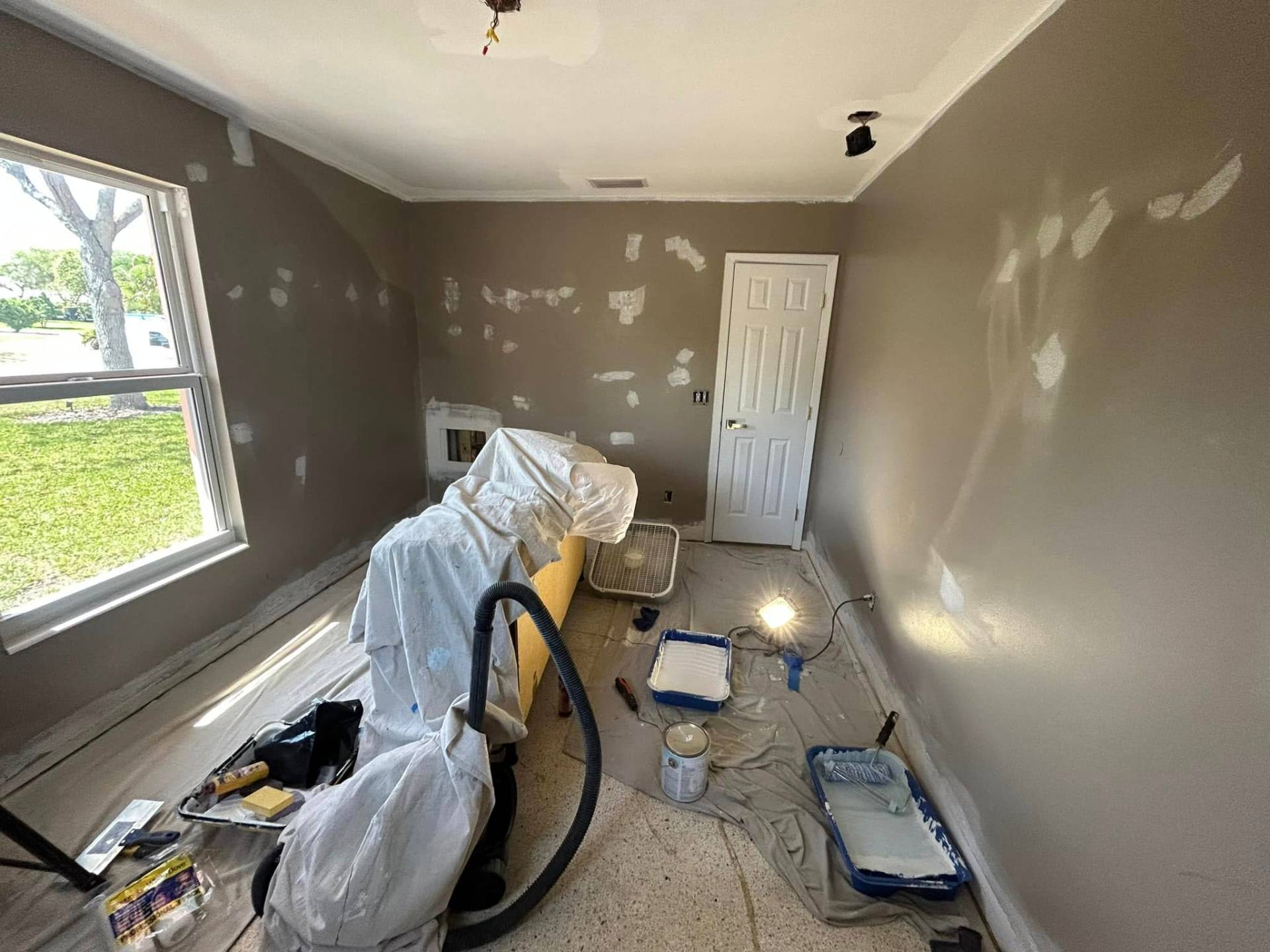
Day 1: Protection and prep
The first day almost never involves color on the wall. A good crew spends it:
- Laying canvas and paper on floors — never just plastic on tile, which gets slick.
- Masking baseboards, cabinets, countertops, and switches with painter's tape and film.
- Removing outlet and switch covers, door hardware, and vent grilles.
- Scraping loose paint, filling nail holes and cracks, sanding patches smooth, and caulking gaps where trim meets wall.
This is the least glamorous day and the one that decides how the finished walls look. Prep is roughly 40–50% of total labor on a proper interior repaint.
Day 2–3: Primer and first coat
Fresh patches, water stains, tannin bleed from old wood, and dramatic color changes all need primer. Skipping primer is how you end up with "flashing" — dull spots where patched areas show through the finish.
Once primer is dry we start rolling the first color coat, cutting in edges with a brush and rolling the field. In Florida, we're careful about airflow: too much AC blowing directly on a wet wall can cause lap marks, so vents in the active room are usually redirected or briefly closed.
What "two coats" really means
Two full coats is standard on walls. It isn't upselling — one coat of most modern paints is translucent, especially over a color change, and coverage is not the same as durability. Two coats give you the film thickness the manufacturer's warranty assumes.
Day 3–5: Ceilings, trim, and doors
Trim, doors, and ceilings are usually a separate pass. Ceilings get flat white unless you asked otherwise. Trim gets a harder, more washable finish — typically a satin or semi-gloss urethane-modified enamel that levels out brush marks and stands up to fingerprints. Doors are often taken off their hinges, sprayed or brushed flat, and rehung once cured.
The final day: Punch list and walkthrough
Before the crew loads the truck, walk the house with the lead painter in daylight — not at night, and not by phone flashlight. Look at:
- Every wall from an angle, not head-on, so you catch roller stipple and holidays.
- Cut lines where wall meets ceiling and where wall meets trim.
- The tops of baseboards and door casings for drips.
- Switch plates and hardware reinstalled straight and tight.
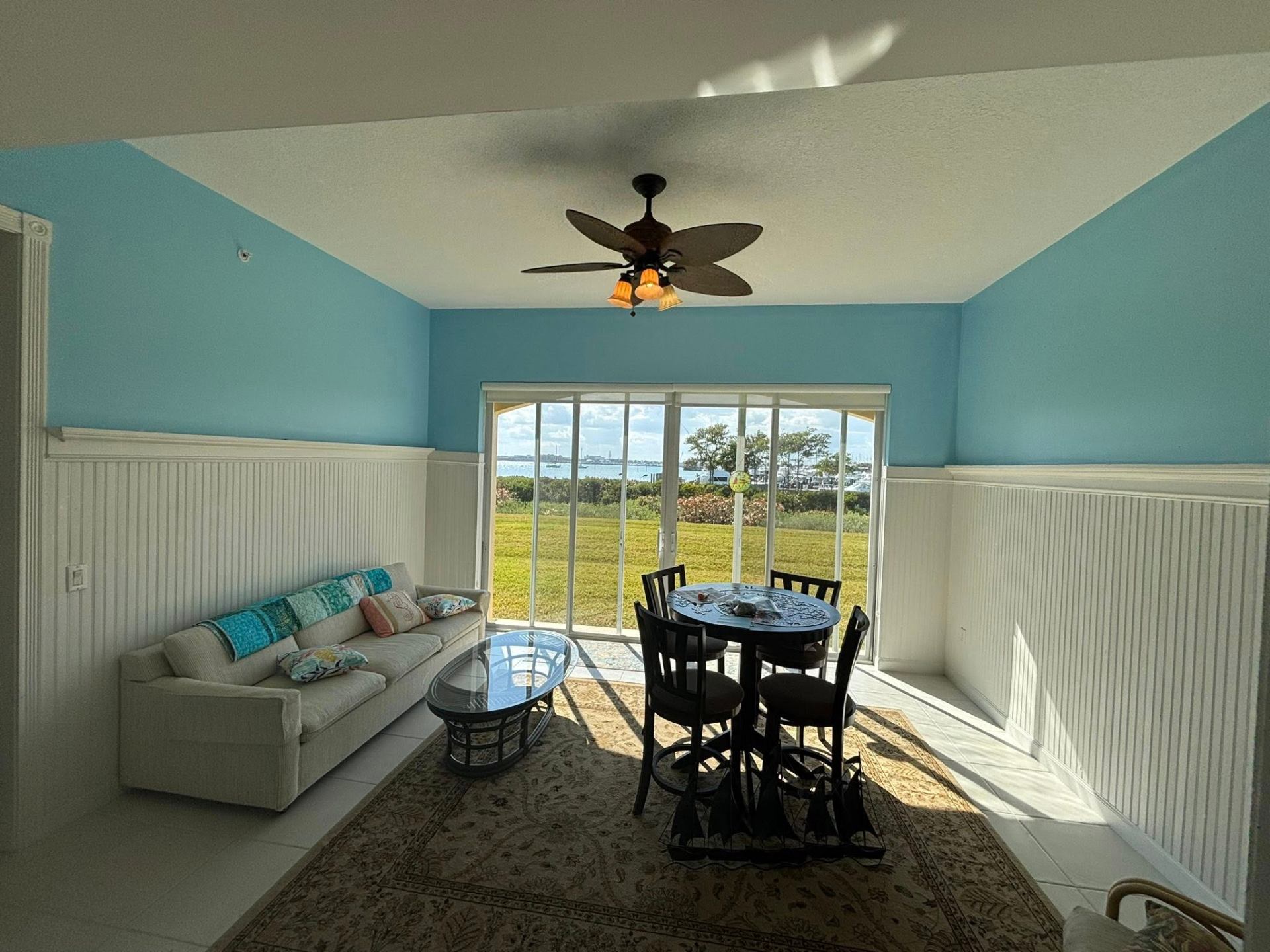
Anything you flag goes on a written punch list and gets fixed before the job is called complete. On our interior painting projects, no invoice goes out until that list is signed off.
Treasure Coast realities
A few things we handle differently down here:
- Humidity. Paint dries by evaporation. In summer we schedule dew-point-sensitive work earlier in the day and keep AC running to pull moisture out of the air.
- Salt air. Homes east of US-1 collect a fine salt film on interior sliders and windows. We wipe those areas down before painting adjacent trim so the new coat actually bonds.
- HOA rules. Interior work isn't usually restricted, but shared-wall condos in places like Hutchinson Island or Jensen Beach may have quiet hours we schedule around.
- Snowbird timing. Many clients want us in while they're up north. We're comfortable working with lockboxes, alarm codes, and daily photo updates.
How long the whole thing takes
A rough guide for a typical Vero Beach / Port St. Lucie home:
- Single room, walls only: 1 day.
- Room with ceiling, trim, and doors: 1.5–2 days.
- Whole interior, walls only: 3–4 days.
- Whole interior with ceilings, trim, and doors: 5–7 days.
Weather, drying times, and how much furniture we're moving all shift the schedule a bit. A serious estimate will give you a working-day window, not a single hard date.